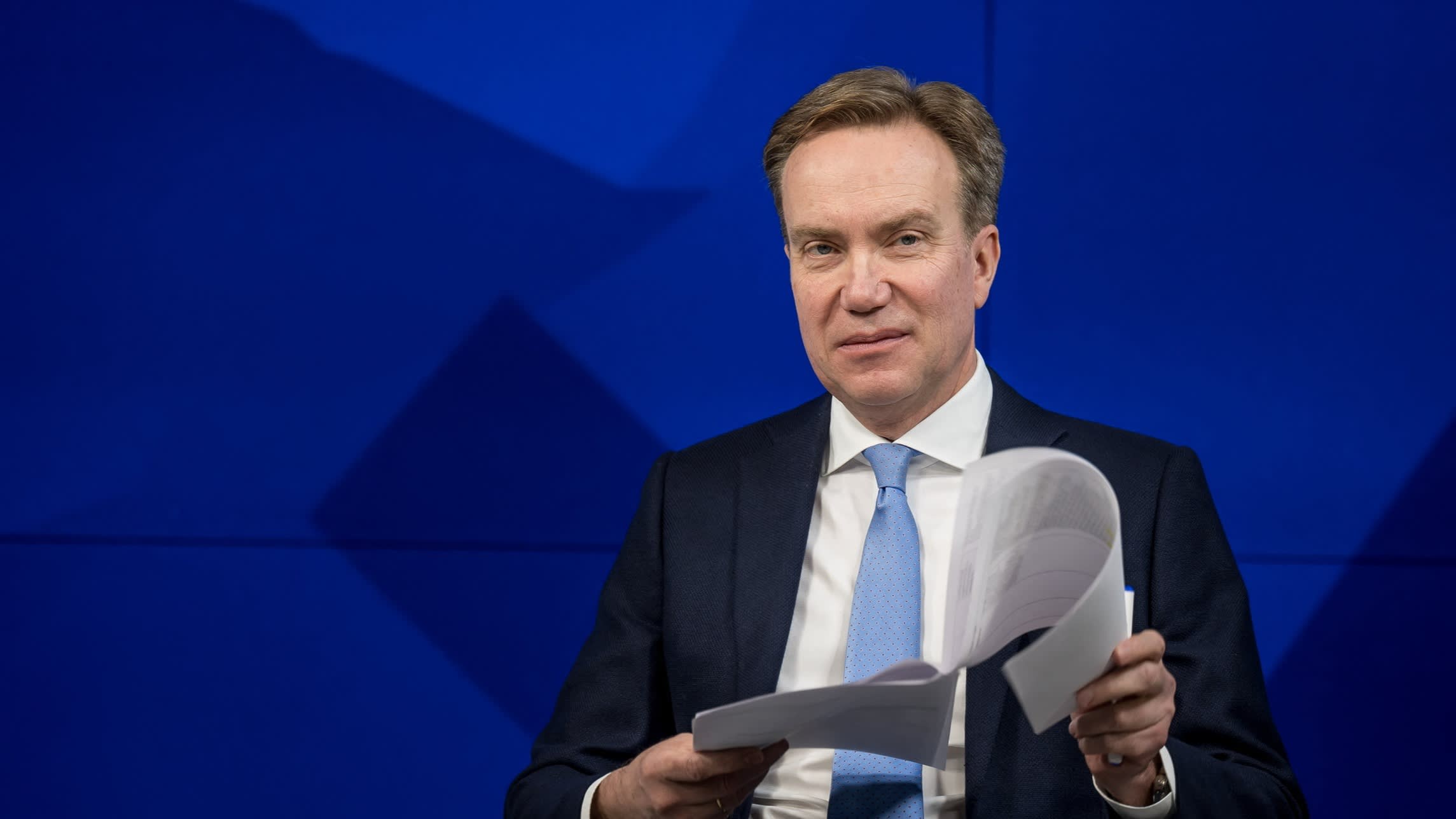
Borge Brende's Departure from WEF: Unpacking the Epstein Connections and Global Implications
The World Economic Forum (WEF), an organization synonymous with global dialogue and shaping international agendas, recently faced a significant leadership transition with the resignation of its President and CEO, Borge Brende. This high-profile departure, which Brende announced on Thursday, has sent ripples through political and economic circles worldwide. At the heart of this decision are revelations linking Brende to the late convicted sex offender, Jeffrey Epstein – connections that emerged from a trove of documents released by the US Department of Justice.
Brende, a former Norwegian foreign minister who assumed the WEF presidency in 2017, cited a desire for the Forum to continue its "important work without distractions" as the primary reason for his exit. However, the timing and context of his statement, which notably omitted any direct mention of Epstein, underscore the intense scrutiny he faced. His borge brende démission marks another chapter in the ongoing saga of influential figures navigating the fallout from their associations with Epstein.
The Epstein Files: A Catalyst for Brende's Resignation
The catalyst for Brende's decision was the public disclosure of documents revealing his interactions with Jeffrey Epstein. These files, released by the US Department of Justice, detailed that Brende had attended three business dinners with Epstein and engaged in communication via email and text message. These revelations prompted the WEF, conveners of the annual Davos summit, to launch an independent investigation into Brende’s relationship with the disgraced financier. This swift action reflects the heightened global awareness and intolerance for any perceived ties to Epstein's illicit activities.
For context, Epstein was first convicted in 2008 of procuring a minor for prostitution, serving a relatively short prison sentence. Despite this conviction, he continued to maintain contacts with a vast network of wealthy and influential individuals, a practice that only ceased with his re-arrest in 2019 on charges of sex trafficking underage girls. He subsequently died by suicide in prison the same year. The continued scrutiny of his network underscores the deep public interest in accountability and transparency, particularly concerning figures in positions of global influence.
Brende's Account and the WEF's Independent Review
In response to the mounting pressure and public inquiry, Brende issued a statement earlier this month offering his version of events. He clarified that his initial contact with Epstein occurred during a 2018 visit to New York, where he received an invitation from former Norwegian politician Terje Rod-Larsen to a dinner. At this gathering, Epstein was introduced to him simply as an "American investor." Brende further stated that he attended two similar dinners with Epstein in 2019, always in the presence of other diplomats and business leaders. He described these dinners, along with a "few emails and SMS messages," as the full extent of their interactions.
Crucially, Brende asserted, "I was completely unaware of Epstein’s past and criminal activities." He expressed profound regret for not having conducted a more thorough investigation into Epstein’s background, stating unequivocally that he would have declined any contact had he known. This plea of ignorance, while understandable given the context of high-level social and business networking, highlights a significant point for public figures: the absolute necessity of due diligence, especially when engaging with individuals whose reputations might be less than stellar. In an era of instant information, the "I didn't know" defense often falls short in the court of public opinion.
The WEF co-chairs, Andre Hoffmann and Larry Fink, subsequently confirmed that the independent review into Brende’s ties with Epstein, conducted by outside counsel, had concluded. The findings, they stated, revealed "no additional concerns beyond what had been previously disclosed." While this conclusion suggests no further hidden improprieties beyond the acknowledged interactions, the very existence of these connections was enough to necessitate a change in leadership to preserve the Forum's integrity and focus.
Implications for Global Governance and Organizational Trust
Borge Brende's resignation underscores several critical themes relevant to global governance and the operations of influential organizations like the WEF. Firstly, it reaffirms the principle of accountability for leaders. In an increasingly transparent world, leaders of major institutions are held to a higher standard, where past associations, however brief or seemingly innocuous, can have profound consequences if those associations are with individuals of questionable character. The public expects not just competence but also impeccable ethical standing from those who aspire to shape global policy.
Secondly, the incident highlights the fragility of trust. The World Economic Forum positions itself as a platform for global cooperation, trust-building, and addressing humanity's most pressing challenges. Any shadow cast by its leadership, particularly concerning issues as egregious as those associated with Jeffrey Epstein, can undermine its credibility and effectiveness. Brende's statement about avoiding "distractions" speaks directly to this point – the WEF cannot afford to have its mission overshadowed by controversies surrounding its top executives.
Practical Insight: The Imperative of Due Diligence for Public Figures
This episode serves as a powerful reminder for anyone in a high-profile position: rigorous due diligence is not optional, it is essential. Before engaging in business dinners, partnerships, or even casual social interactions with new contacts, especially those introduced by third parties, a quick background check can prevent significant reputational damage. While personal vetting might seem cumbersome, the alternative, as Brende's case illustrates, can be far more costly. Leveraging publicly available information, professional networks, and even specialized services for background checks should be standard practice for individuals whose public image and organizational reputation are paramount.
Moving Forward: The WEF's Leadership Transition
With Brende's departure, the WEF has moved swiftly to ensure continuity. Alois Zwinggi will serve as interim President and CEO, a crucial step to maintain stability while the board of trustees oversees the leadership transition. The search for a permanent successor will undoubtedly be a meticulous process, with an emphasis not only on leadership capabilities but also on an unimpeachable ethical record. The next leader will face the challenge of reaffirming the WEF's commitment to its mission and reinforcing public trust in its governance.
The borge brende démission is more than just a personnel change; it's a moment for reflection on the standards expected of global leaders and institutions. It reinforces the notion that in today's interconnected world, past actions and associations, however distant, can always resurface and demand accountability. For organizations like the WEF, maintaining an unwavering commitment to transparency and ethical leadership will be paramount as they navigate an increasingly complex global landscape.