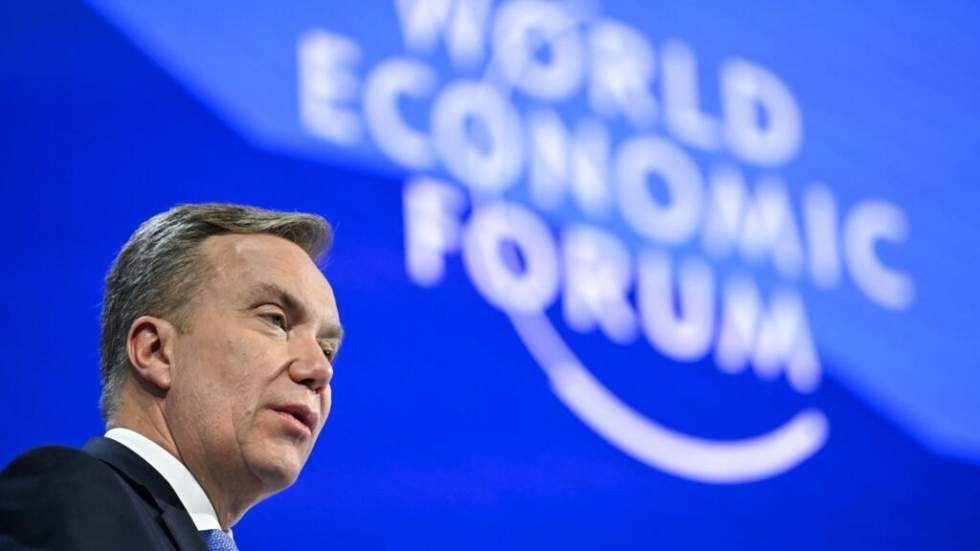
Borge Brende Steps Down from WEF Amidst Jeffrey Epstein Revelations
The global stage was recently marked by a significant development as Borge Brende, the esteemed President and CEO of the World Economic Forum (WEF), announced his resignation. This pivotal decision follows mounting scrutiny over his past interactions with the late financier and convicted sex offender, Jeffrey Epstein. The departure of Brende, a former Norwegian foreign minister who had helmed the WEF since 2017, underscores the far-reaching repercussions of the recently declassified files by the US Department of Justice, which exposed a complex web of associations between Epstein and numerous influential figures worldwide.
In a statement announcing his departure, Brende reflected on his 8.5-year tenure at the WEF as "profoundly rewarding" and expressed gratitude for collaborations. Notably, his statement made no direct mention of Epstein or the controversy, instead citing the belief that "now is the right moment for the Forum to continue its important work without distractions." This move, while framed as a strategic step for the organization, directly followed weeks of intense public and internal examination into his conduct, making it clear that the specter of the Epstein saga had become an untenable burden for the WEF's leadership.
The Unfolding of a High-Profile Departure
The path to Borge Brende's resignation was paved by the release of documents that detailed his interactions with Epstein. These revelations prompted the WEF, conveners of the annual Davos summit, to launch an independent investigation into the extent and nature of their relationship. The findings of this internal review, conducted by outside counsel, concluded that there were "no additional concerns beyond what had been previously disclosed," a statement aimed at curtailing further speculation while affirming the known contacts.
Initial Revelations and the WEF's Response
The critical turning point came with the public disclosure of files by the US Department of Justice. These documents, part of a wider cache concerning Jeffrey Epstein's network, brought to light that Brende had attended three business dinners with Epstein and had exchanged communications via email and text message. Such revelations immediately triggered an independent review by the WEF, an organization that prides itself on fostering trust and ethical leadership among global elites. The internal investigation, while concluding with no *new* concerns, solidified the factual basis of Brende's interactions with Epstein, propelling the narrative forward and intensifying the call for accountability. For more details on the initial investigation, you can read about
WEF Chief Brende Departs After Epstein Files Investigation.
Brende's Stance and Unawareness Claim
Addressing the controversy earlier, Brende had clarified the circumstances surrounding his contact with Epstein. He stated that his first encounter occurred in 2018 during a visit to New York, where he was invited to a dinner by former Norwegian politician Terje Rod-Larsen. At this event, Epstein was introduced to him as an "American investor." Brende subsequently attended two similar dinners in 2019, also alongside other diplomats and business leaders. He maintained that these dinners, along with a "few emails and SMS messages," constituted the entirety of their interactions.
Crucially, Brende asserted, "I was completely unaware of Epstein’s past and criminal activities." He expressed profound regret for not having conducted a more thorough investigation into Epstein's background, stating that had he known, he would have declined any contact with the convicted sex offender. This defense, while common among those entangled in Epstein's network, highlights the critical importance of due diligence, especially for individuals in positions of significant global influence. It serves as a stark reminder that ignorance, whether willful or not, does not absolve high-profile figures from the reputational damage and ethical questions that arise from such associations.
Navigating the Complex Web of Jeffrey Epstein's Connections
Jeffrey Epstein's story is a chilling narrative of how power and wealth can be used to facilitate heinous crimes, and how a network of influential contacts can inadvertently, or knowingly, provide a veneer of legitimacy. His conviction in 2008 for procuring a minor for prostitution, followed by a lenient sentence, did little to deter his contacts with a vast array of wealthy and influential figures. These connections persisted until new charges of sex trafficking underage girls led to his arrest in 2019, culminating in his death by suicide in prison later that year.
The Extent of the Interactions
The details of Brende's interactions—three dinners and limited electronic communication—might seem minor in isolation. However, in the context of Epstein's documented criminal history and the broader implications of his network, even these limited contacts become significant. They fuel the general scrutiny of Epstein’s network across business and political elites, raising questions about judgment and the responsibility that comes with leadership roles. For a deeper dive into these specifics, refer to
Borge Brende's WEF Exit: Unpacking His Epstein Connections.
**Practical Tip for Leaders:** In an increasingly interconnected world, leaders and organizations must implement robust due diligence protocols for all significant professional interactions, especially those introduced by third parties. Simple online searches and background checks can often uncover critical information that safeguards reputation and prevents unintended associations with disreputable individuals.
The WEF's Independent Review: What it Found
The independent review commissioned by the WEF was a critical step in addressing the controversy surrounding Brende. Such a review is standard practice for organizations facing significant reputational threats. While its conclusion—that no new concerns beyond what was already known emerged—might be seen as limited, it formally closed the internal investigation, allowing the organization to move forward. The WEF’s co-chairs, Andre Hoffmann and Larry Fink, acknowledged the findings, emphasizing the forum's commitment to maintaining its integrity. The emphasis on "no additional concerns" aimed to provide a definitive internal perspective, thereby concluding the immediate investigative phase within the organization.
Implications for the World Economic Forum and Global Leadership
Borge Brende's resignation has profound implications, not just for his personal career but also for the World Economic Forum and the broader landscape of global leadership. The incident underscores the heightened demand for transparency and accountability from public figures and institutions alike.
Reputational Risk and the Call for Transparency
The WEF, as a platform for global dialogue and collaboration among leaders from business, politics, and civil society, relies heavily on its reputation for integrity and neutrality. Associations, even indirect ones, with figures like Epstein can severely damage this standing. Brende's resignation, while potentially disruptive, can also be viewed as a necessary step to mitigate further reputational damage, allowing the Forum to reaffirm its commitment to ethical governance and transparency.
**Key Insight:** This incident highlights how reputational risk is no longer just about direct misconduct, but also about the perceived judgment and associations of leaders. Public trust is a fragile commodity, and its erosion can undermine the effectiveness of even the most influential organizations.
The Road Ahead: Interim Leadership and Future Direction
With Brende's departure, the WEF has announced that Alois Zwinggi will serve as interim president and CEO. The forum's board of trustees will oversee this leadership transition, including the crucial process of identifying a permanent successor. This period of transition will be critical for the WEF to demonstrate its resilience and reaffirm its mission. The new leadership will face the immediate challenge of rebuilding trust and ensuring that the organization can continue its important work "without distractions," as Brende himself put it. This includes navigating the ongoing scrutiny and setting an uncompromising standard for ethical conduct for all its participants and leaders.
The future direction of the WEF will likely involve an even greater emphasis on ethical guidelines and stricter vetting processes for its leadership and potentially for attendees of its high-profile events. This event serves as a powerful testament to the ever-increasing demands for accountability placed on global leaders and the organizations they represent.
The resignation of Borge Brende, a high-profile figure from the World Economic Forum, due to his links with Jeffrey Epstein, marks a significant moment in the ongoing saga of accountability for powerful individuals. While Brende maintains his unawareness of Epstein's criminal past, the incident underscores the critical importance of due diligence, transparency, and ethical leadership in an interconnected world. The WEF now faces a period of transition and an opportunity to reinforce its commitment to integrity, ensuring that its vital work in addressing global challenges remains untainted by such controversies. The wider implication is a clear message to all global leaders: the public and institutions alike demand unwavering commitment to ethical standards and absolute clarity regarding associations that could compromise trust.